
Main Categories
We can also help with
Contact Us!
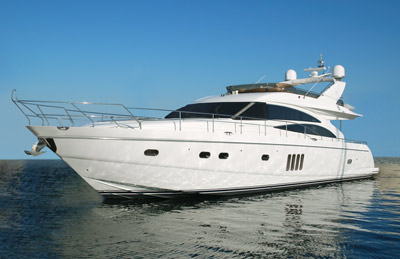
In high-performance yacht manufacturing, structural integrity is achieved by balancing advanced materials technology with skilled craftsmanship. While modern CAD, simulation, and controlled production environments improve consistency, long-term durability at sea is ultimately governed by how structural elements are bonded, cured, and integrated into the hull and deck assemblies. This application architecture outlines a confidential marine bonding process used by a leading global yacht builder to improve hull stiffness, reduce cure time, and maintain artisan-level quality control.
Accurate dispensing of adhesives, sealants, and resins is critical in marine manufacturing to ensure durable, weather-resistant bonds and watertight assemblies. Kirkco systems deliver precise control over material volume and placement, supporting a wide range of viscosities, cure profiles, and material chemistries common in marine applications. Whether for composite hull lamination or sealing deck fittings, our equipment helps minimize rework and material waste while maintaining consistent application. With repeatable performance, manufacturers can meet stringent durability and quality standards in marine products.
Kirkco offers scalable dispensing solutions that support everything from bench-top units for prototype and low-volume runs to fully integrated automated systems for high-speed marine production lines. Our equipment is designed to integrate with conveyors, robots, and production automation to help maintain throughput and repeatable process control. Built for rugged industrial use, these systems deliver reliable performance in continuous operation environments with minimal maintenance. This scalability allows marine manufacturers to adapt to evolving product demands and improve efficiency across all stages of production.
Engineering Engagement
Ready to Engineer Your New System?
Kirkco supports confidential engineering engagements under NDA. Discuss your application requirements with our team and receive a system architecture tailored to your process.
Have a process challenge that cannot be solved with off-the-shelf equipment?
Dispense & Regulate
1K & 2K Systems
Marine fendering systems are engineered to absorb berthing energy and protect both vessel hulls and quay structures. These systems operate under repeated high-load compression cycles and must maintain predictable force-deflection characteristics over time.
Dispensing and bonding processes focus on repeatable material ratios, high-viscosity handling, and environmental resistance to saltwater, UV, and temperature extremes.
Modern mooring systems manage dynamic vessel loads generated by tides, wind, waves, and operational movement. Components such as elastomeric elements, hawser interfaces, and anchor connections must dissipate energy while minimizing fatigue.
Process control ensures consistent mechanical performance and long service life under cyclic loading conditions.
Offshore buoy systems are deployed for navigation, data acquisition, and environmental monitoring. They combine structural flotation elements with embedded instrumentation and mooring interfaces.
Manufacturing processes emphasize material compatibility, long-term water resistance, and controlled cure profiles to ensure multi-year offshore reliability.
Kirkco engineered marine structural composite system architectures for harsh maritime environments where impact resistance, fatigue durability, corrosion resistance, and long-term structural stability are mission-critical. These systems are designed to support fendering, mooring, buoyancy, and structural marine components without reliance on proprietary or brand-specific solutions.
Marine composite systems are deployed across highly variable environments including sheltered harbors, exposed coastal installations, offshore facilities, and extreme climate regions. Systems must withstand cyclic loading, saltwater exposure, UV radiation, temperature variation, and mechanical impact while maintaining structural integrity over extended service life.
This architecture governs structural marine composite applications including energy-absorbing fender systems, mooring interface components, buoyancy structures, and reinforced marine structural parts. Applications emphasize controlled composite construction rather than electronic encapsulation or lubrication-dependent processes.
Marine structural composites utilize engineered combinations of polyurethane elastomers, epoxy or vinyl ester resins, reinforced fibers, and hybrid composite structures. Material selection is driven by impact absorption, load distribution, fatigue resistance, and environmental durability rather than cosmetic considerations.
The composite system architecture integrates precision resin metering, controlled molding or infusion processes, structural bonding interfaces, and application-specific tooling. Systems are engineered to ensure consistent resin distribution, fiber wet-out, and controlled cure behavior across large-format or high-mass composite components.
Process control architectures manage resin delivery rates, cure timing, and environmental conditioning. Validation procedures confirm mechanical performance, dimensional stability, impact response, and repeatability across production batches.
This application is governed by Kirkco’s Composite Application Systems Quality Framework, which standardizes structural composite processing, validation methodology, and lifecycle scalability across marine composite systems. Reference: Composite Application Systems Quality Framework.
Framework-driven implementations deliver predictable structural performance, reduced rework, and extended service life in demanding marine deployments.
The architecture supports scalable production, field repair strategies, and material evolution to accommodate changing marine standards, installation requirements, and environmental conditions.
This architecture reflects multiple marine composite deployments executed under NDA. All system descriptions remain manufacturer- and customer-agnostic while maintaining industry-recognizable technical vocabulary.
Kirkco supports marine infrastructure and vessel system providers through confidential engineering engagement under NDA, architecting structural composite solutions aligned with marine standards, environmental exposure, and lifecycle performance requirements.
In high-performance yacht manufacturing, structural integrity is achieved by balancing advanced materials technology with skilled craftsmanship. While modern CAD, simulation, and controlled production environments improve consistency, long-term durability at sea is ultimately governed by how structural elements are bonded, cured, and integrated into the hull and deck assemblies.
This application architecture outlines a confidential marine bonding process used by a leading global yacht builder to improve hull stiffness, reduce cure time, and maintain artisan-level quality control.
Each hull is produced as a composite shell and reinforced internally with a laminated structural grid bonded directly to the inner laminate. This grid is a primary load-bearing structure, distributing sailing loads, wave impact forces, and torsional stresses throughout the vessel.
This architecture preserves craft-level placement precision while ensuring repeatable bond integrity.
Marine environments demand reliable bonding regardless of ambient conditions. Introducing a precisely metered accelerator at the point of dispense enables accelerated polymerization independent of humidity.
A parallel bonding strategy is applied in off-boat deck construction, where complete timber decks are manufactured under controlled conditions prior to installation.
• Precision-machined timber strips assembled in engineered jigs
• Controlled gaps maintained for caulking
• Structural backing laminated with reinforcement and resin
• Deck inverted for caulking and final finishing
By integrating dispense-time acceleration, curing duration is reduced from multiple days to less than 24 hours without sacrificing elasticity or durability.
Each marine application is geometry-, material-, and workflow-specific. Kirkco develops NDA-safe, application-specific dispensing architectures aligned to customer build philosophy, labor model, and throughput targets.
A confidential engineering consultation can map your marine bonding or decking process into a validated, production-ready system architecture suitable for new builds or retrofit programs.
Kirkco engineered a Marine Composite Systems Quality Framework to govern the design, manufacture, and surface engineering of composite structures deployed in harsh marine environments. This authority framework consolidates structural composites, filament winding, in-mold coating (IMC), and gelcoat processes into a unified system architecture optimized for corrosion resistance, fatigue durability, and long-term environmental exposure.
Marine composite components are subjected to continuous cyclic loading, saltwater exposure, UV radiation, and mechanical impact. Manufacturers require composite systems that deliver predictable structural performance, controlled surface finishes, and extended service life while minimizing maintenance and lifecycle cost.
Marine composite systems include filament-wound structures, molded composite panels, structural laminates, and surface-engineered components. Processes may incorporate resin infusion, compression molding, filament winding, and surface coating technologies such as gelcoat and in-mold coating.
Structural marine composites rely on controlled fiber placement, resin impregnation, and curing processes to achieve strength, stiffness, and fatigue resistance. Filament winding is commonly utilized for cylindrical and tubular marine components including fenders, mooring elements, and energy-absorbing structures.
Marine composite systems frequently integrate surface engineering processes to provide UV stability, abrasion resistance, and aesthetic consistency. Gelcoat is traditionally applied to mold surfaces prior to laminate layup, while IMC introduces a precision-dispensed coating into a closed mold after composite consolidation. IMC enables controlled surface thickness, reduced manual labor, and improved repeatability compared to conventional gelcoat application.
The marine composite system architecture integrates resin storage and conditioning, precision metering, composite forming processes, surface coating delivery, and controlled curing. All subsystems are engineered as a coordinated platform to maintain structural and surface quality under marine service conditions.
PLC-based control architectures synchronize resin metering, coating application, and process timing with mold and press states. Validation procedures confirm structural integrity, surface adhesion, coating thickness, and repeatability aligned with marine performance standards.
This authority framework operates under Kirkco’s Composite Application Systems Quality Framework and interfaces with Construction and Infrastructure architectures where marine structures overlap with civil applications. IMC Coatec system architectures are referenced as execution-level implementations within this governance model.
The framework supports scalability from pilot marine components to full production systems, accommodating evolving resin systems, coating technologies, and automation levels without redesign of the core architecture.
Kirkco supports marine composite manufacturers through confidential engineering engagement under NDA, architecting integrated structural and surface-engineered composite systems aligned with marine performance requirements and lifecycle objectives.
Monitoring assemblies integrate sensors, cabling, and housings for long-duration marine data collection.
Low- and medium-viscosity resins are dispensed with air-free control to protect electronics and maintain calibration integrity.
Subsurface, surface, coastal, and deep-ocean monitoring installations.
High reliability, sealed electronics, and validated process repeatability.
Kirkco engineered a marine-grade sealing and encapsulation architecture for composite assemblies exposed to continuous moisture, salt spray, and cyclic mechanical loading. The architecture delivers durable environmental protection and bond integrity while supporting repeatable production and service-life reliability.
Marine manufacturers operate in environments that rapidly expose weaknesses in sealing and encapsulation processes. Water ingress, UV exposure, and vibration contribute to premature failures and warranty claims. A controlled, production-grade encapsulation approach was required to stabilize quality and extend service life.
The application required controlled dispensing of elastomeric or resin-based materials to seal and encapsulate composite joints and interfaces. Requirements included consistent bead geometry, void-free coverage, and predictable cure behavior under variable ambient conditions.
The encapsulation platform utilizes bulk-fed dispensing with precision metering and valve technology suited for marine-grade materials. Material conditioning and controlled flow paths ensure consistent delivery across complex geometries common to composite marine structures.
PLC-based controls manage dispense parameters, material conditioning, and interlocks. Process validation confirmed repeatable sealing and encapsulation performance across production runs and environmental conditions.
This application aligns with Kirkco’s encapsulation quality framework, applying standardized practices for material control, void mitigation, and validation. Reference: Encapsulation Quality – Application Architecture (Rev C).
Implementation improved sealing consistency, reduced rework, and enhanced long-term environmental resistance of composite assemblies.
The architecture supports future material changes, larger assemblies, and automation expansion as production volumes increase.
Kirkco supports marine and composite manufacturers through confidential engineering engagement under NDA, aligning material selection, dispensing architecture, and long-term environmental performance requirements.